
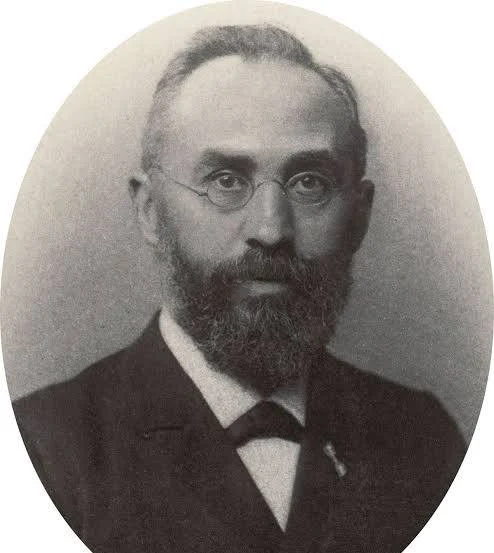
Hendrik Lorentz
Dutch physicist and Nobel laureate
🌍 Dutch · Born July 18, 1853 · Died February 4, 1928
About
Hendrik Lorentz was a pioneering Dutch physicist who won the 1902 Nobel Prize in Physics alongside Pieter Zeeman for their discovery and theoretical explanation of the Zeeman effect. Born in Arnhem, Netherlands, Lorentz made foundational contributions to theoretical physics, most notably with his theory of electromagnetic radiation, which synthesized classical mechanics and electromagnetism. He introduced the concept of local time and formulated the mathematical equations known as the Lorentz transformations. These equations formed the basis of Albert Einstein's special theory of relativity, bridging the gap between classical Newtonian physics and modern physics. Lorentz served as a professor of mathematical physics at Leiden University for over three decades, transforming the institution into a global hub for scientific research. He also chaired the prestigious Solvay Conferences, playing a key role in the development of early quantum mechanics and serving as a diplomatic mediator in the international scientific community after World War I. His work on the electron theory, the Lorentz force, and the Lorentz-Lorenz formula cemented his legacy as one of the greatest theoretical physicists of the late nineteenth and early twentieth centuries. His funeral in 1928 was attended by thousands, including representatives from across Europe, reflecting his immense international standing.
Intelligence Summary
Doctoral Degree from Leiden University
Lorentz defended his doctoral thesis on the theory of reflection and refraction of light, establishing himself as a brilliant theoretician.
Appointed Professor at Leiden University
At the age of 24, Lorentz was appointed to the newly established chair of mathematical physics at Leiden University.
Nobel Prize in Physics
Awarded the Nobel Prize in Physics alongside his pupil Pieter Zeeman for their investigations into the influence of magnetism upon radiation phenomena.
Published Lorentz Transformations
Formulated the mathematical transformations describing how measurements of space and time by two observers in relative motion differ.
Chaired the First Solvay Conference
Served as president of the first Solvay Conference in Brussels, guiding discussions on the radical new theories of radiation and quanta.
Appointed Director of Teylers Museum
Retired from his regular professorship at Leiden to become Curator of the Physics Cabinet at Teylers Museum in Haarlem.
No organizations found.
No connections found.
All data sourced from verified public references.
Hendrik A. Lorentz - Biographical
The Nobel Prize Organization
https://www.nobelprize.org/prizes/physics/1902/lorentz/biographical/ →