
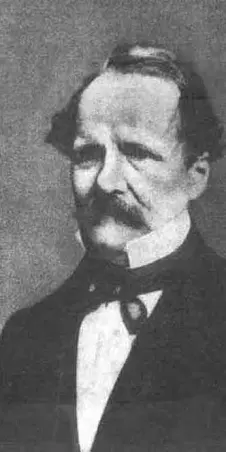
Ernst Kummer
German mathematician and pioneer of algebraic number theory
🌍 German · Born January 29, 1810 · Died May 14, 1893
About
Ernst Kummer was an eminent nineteenth-century German mathematician whose pioneering contributions profoundly shaped the fields of abstract algebra, number theory, and geometry. He is most famous for introducing the concept of ideal numbers to restore unique factorization in cyclotomic fields. This groundbreaking advancement laid the absolute foundation for modern algebraic number theory and the later development of abstract ring theory by Richard Dedekind and others. Kummer's development of ideal numbers was closely linked to his monumental progress toward proving Fermat's Last Theorem, demonstrating its validity for a large class of prime exponents known as regular primes. Beyond his algebraic achievements, Kummer made major contributions to mathematical physics, function theory, and geometry. He discovered the Kummer surface, a special quartic surface with sixteen double points, which remains highly significant in algebraic geometry. Kummer spent a highly productive academic career teaching initially at the University of Breslau and later at the prestigious University of Berlin. In Berlin, he collaborated closely with colleagues Karl Weierstrass and Leopold Kronecker, transforming the institution into one of the world's premier centers for mathematical research and education. As an inspiring educator, Kummer mentored numerous influential mathematicians, including Kronecker, Georg Cantor, and Ferdinand Georg Frobenius. His extensive research legacy and pedagogical influence remain central to modern mathematics.
Intelligence Summary
Doctoral Degree
Awarded a PhD from the University of Halle after submitting a notable mathematical essay.
Professor at Breslau
Appointed as a full professor of mathematics at the University of Breslau.
Introduction of Ideal Numbers
Published his groundbreaking paper introducing ideal numbers to resolve unique factorization issues.
Chair at University of Berlin
Succeeded Peter Gustav Lejeune Dirichlet as professor of mathematics at the University of Berlin.
Paris Academy Grand Prix
Awarded the prestigious Grand Prix by the Paris Academy of Sciences for his work on Fermat's Last Theorem.
Retirement
Retired from active teaching and research at the University of Berlin.
No organizations found.
No connections found.
All data sourced from verified public references.
Lectures on the History of Mathematics
American Mathematical Society